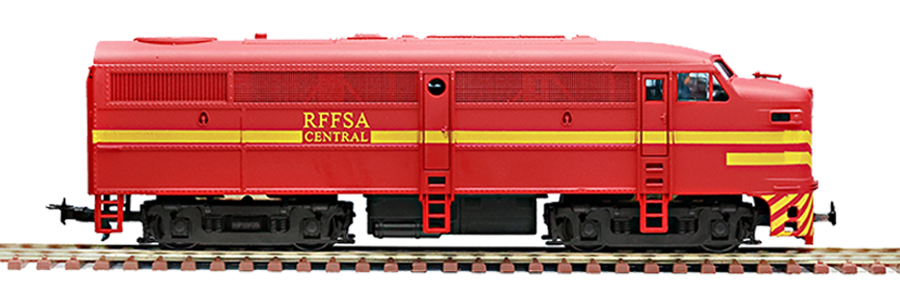
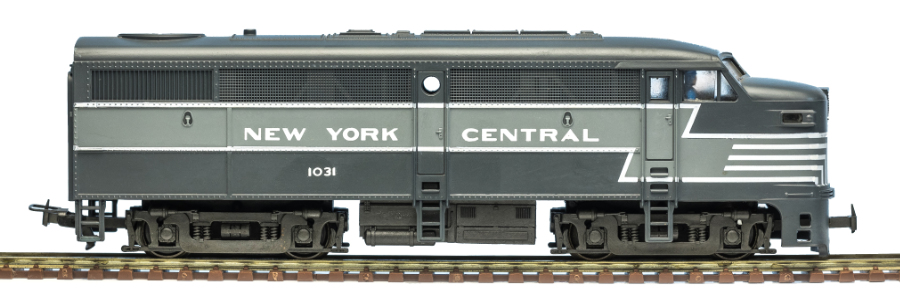
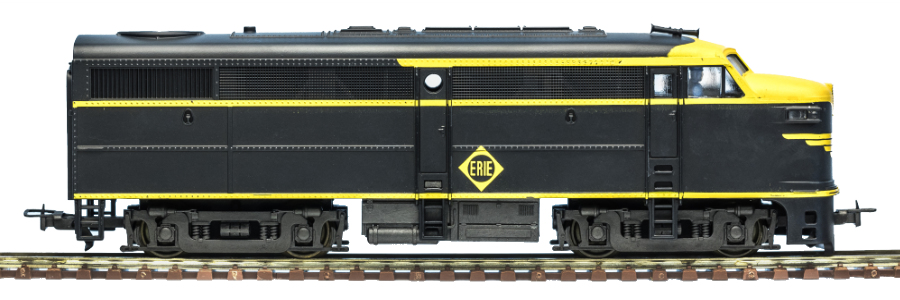
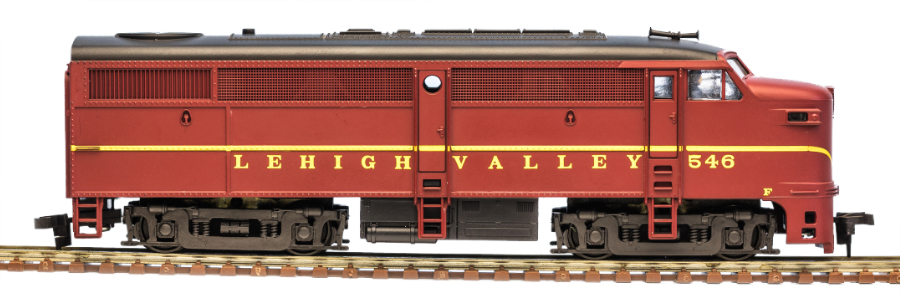
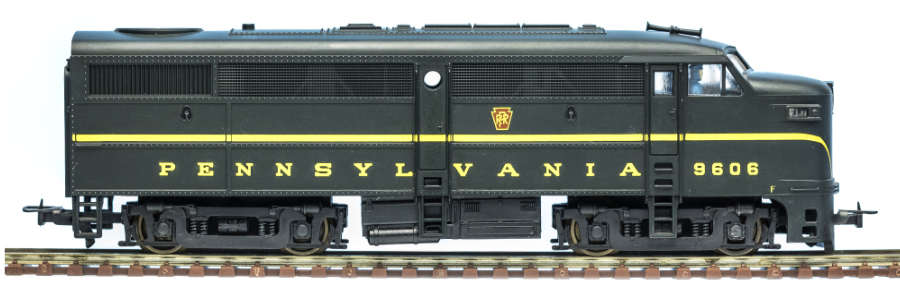
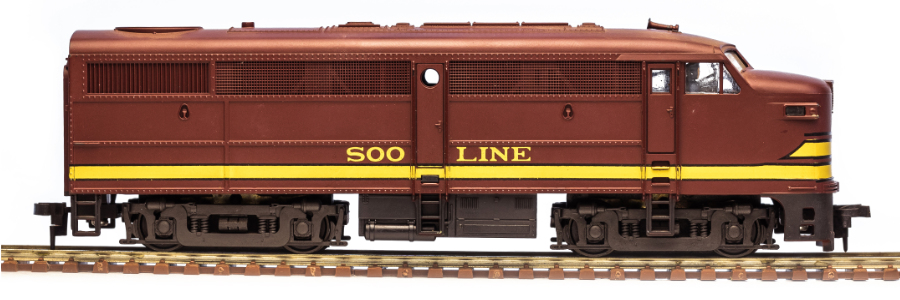
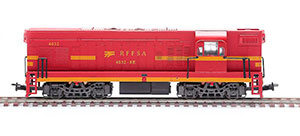
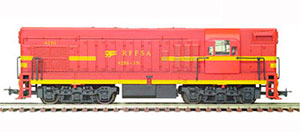
FA-1
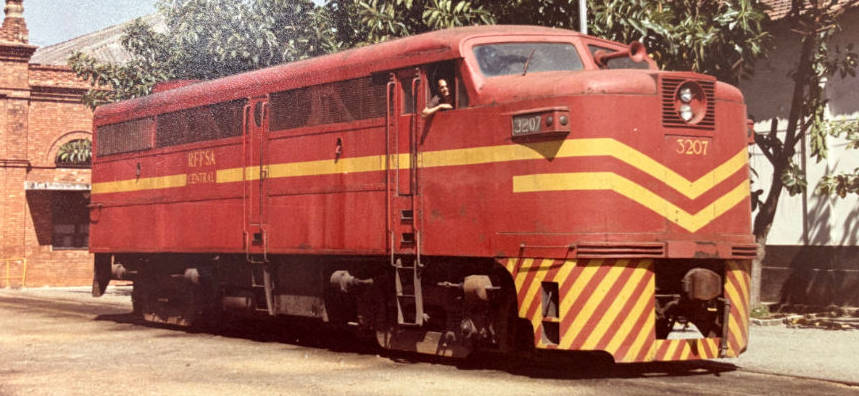
The FA-1 dates from the early 1940s, when the American Locomotive Co. (ALCO) decided to produce a locomotive capable of competing with the FT version from General Motors.
The original 1,350 HP engine project was put on hold until 1944 due to World War II. Unfortunately, after the first tests, many technical problems were detected on the turbo supercharger and on the engine crankshaft, which immediately led to the start of a new project — the so-called "244" — capable of delivering 1,500 HP.
The first three prototypes built with this new engine gave rise to the well-known FA-1.
Industrial designer Ray Stevenson was the one who outlined the overall external shape, and the first 37 locomotives were sold to Gulf Mobile & Ohio Co.
The FA-1 was modified from its original DL-208 version to DL-208A, DL-208B to DL-208C, and was subsequently continued with the FA-2 version.
The first twelve exported locomotives came to E.F. Central do Brasil during May and June of 1948, and were used to pull the Santa Cruz and Vera Cruz passenger trains between Rio de Janeiro and São Paulo, and between Rio de Janeiro and Belo Horizonte.