Consolidation
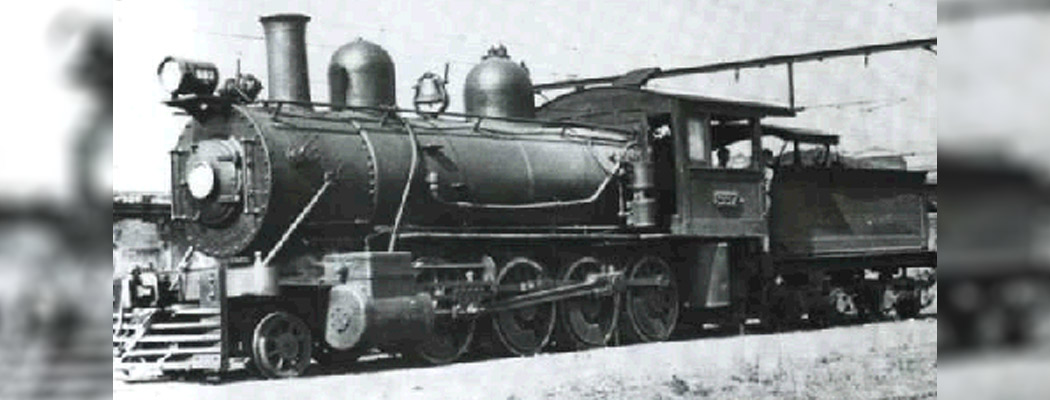
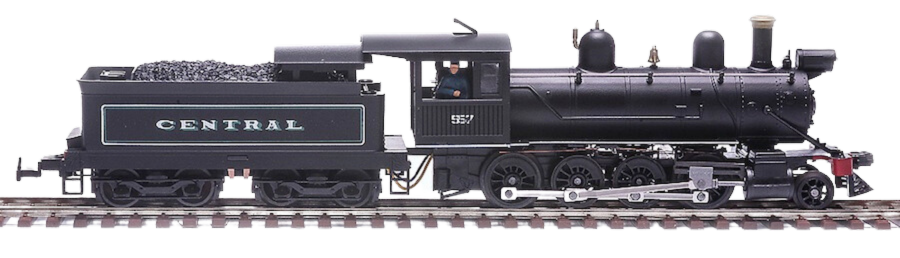
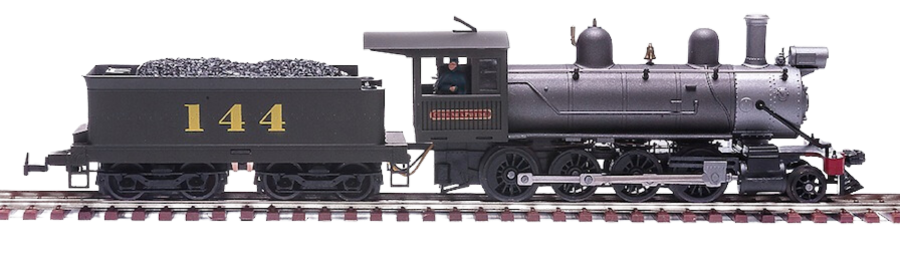
Consolidation locomotives are steam locomotives that have two wheels on the leading truck, eight driving wheels, and no trailing truck. For this reason, under the "WHYTE" classification system for steam locomotives, they are coded as 2-8-0. The Consolidations were so named because several railroads joined the "LEHIGH VALLEY" system around the time the first 2-8-0s were built for that railroad. They were built after 1866 and were used primarily for freight service, due to their small-diameter driving wheels. For this same reason they had a major speed limitation. Our prototype was built by Baldwin Locomotive Works, but most of the major steam locomotive manufacturers built thousands of Consolidations between 1866 and 1930. This is a typical late-19th-century type and was used by virtually every railroad — standard, broad, or narrow gauge — around the world. The first Consolidations on the Brazilian Central Railway were the 500 series, dating from 1877 to 1915. This particular prototype dates from January 1909 and operated freight trains until 1960, during the dieselization period.
Wheel arrangement: 2-8-0 Consolidation — Manufacturer: Baldwin Locomotive Works — E.F. Central do Brasil number: 557 — Baldwin number: 33167 — Year built: 1908 — Entered service: Jan. 1909 — Retired: 1960 — Locomotive weight: 60,341 kg — Loaded tender weight: 32,659 kg — Total weight: 93,200 kg — Valve gear: Stephenson — Total length: 18.3 m — Tractive effort: 14,542 kg